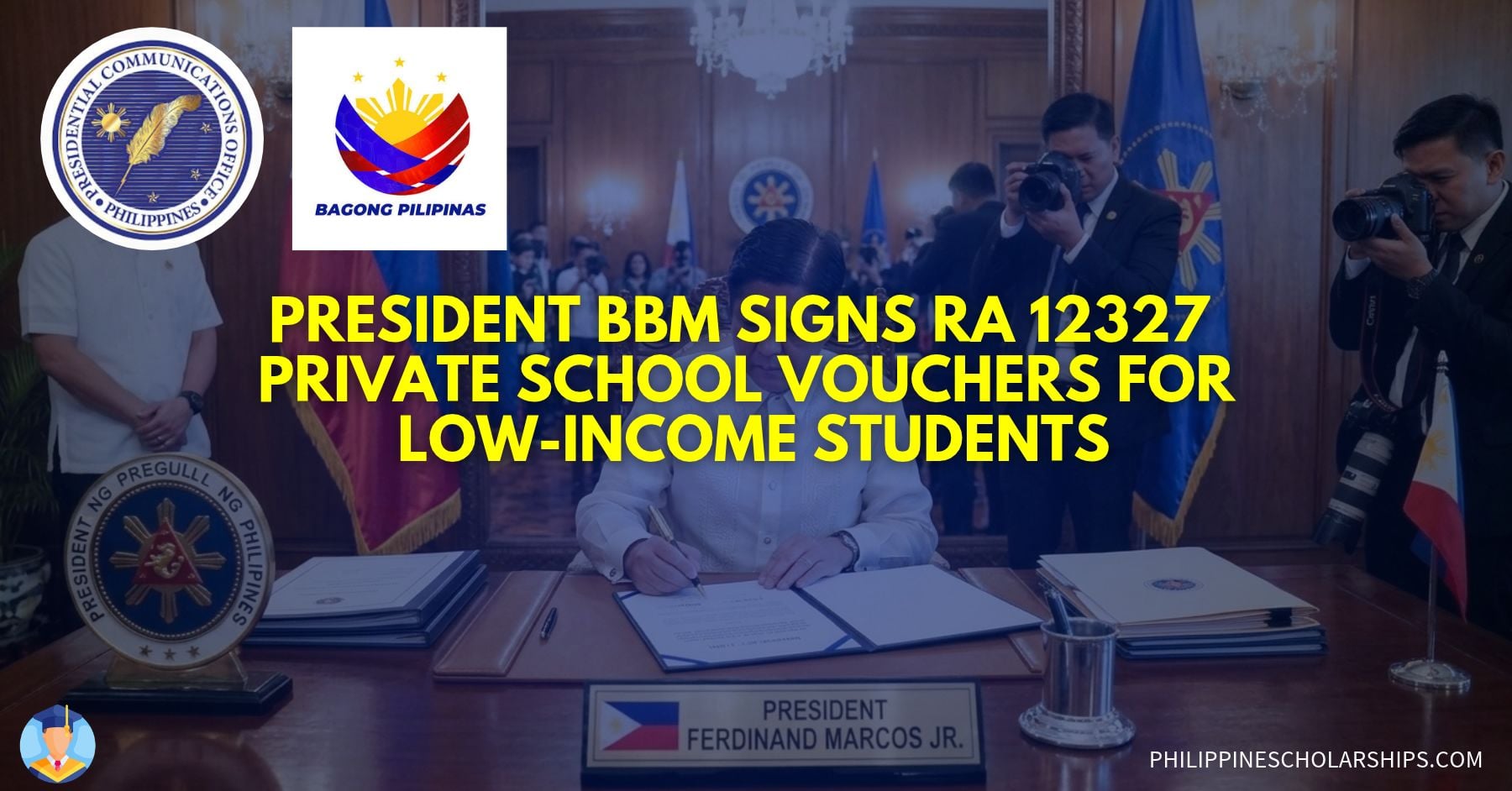
Families struggling to find a seat for their children in packed public classrooms may soon have another option. On November 12, President Ferdinand R. Marcos Jr. signed Republic Act No. 12327, the Basic Education Voucher Assistance Act. The law creates a government-funded program that helps qualified students from underprivileged households enroll in participating private schools.
The measure takes on two long-standing problems at once: limited access to quality education for poorer families and overcrowding in public schools.
How the Voucher System Works
The government will issue vouchers to eligible learners enrolled in participating private basic education institutions. The aid goes toward the cost of their schooling.
The law covers every private basic education school that receives government support. That support can come as student vouchers, teacher subsidies, or direct assistance to the school.
Students from low-income households will receive larger vouchers, so more help goes to the families who need it most.
Who Gets Priority
The law gives first consideration to:
- Students who previously attended public schools identified as congested
- Learners living in areas with no nearby public school
- Those residing in communities where public schools are overcrowded
DepEd Sets the Amounts and Tracks Results
The Department of Education (DepEd) will set the value of each voucher based on commissioned research. It must review the amounts at least once every three years to keep pace with inflation and other rising costs.
DepEd will also hold participating schools accountable. Private institutions must secure department recognition and undergo periodic assessments. The agency will track how learners actually perform, including literacy and numeracy rates and results in national and international assessments. It will also monitor the academic performance and completion rates of underprivileged students.
A 60-Day Payment Deadline
The law gives partner schools a clear timeline. Voucher payments must be released within 60 days after a school submits complete documentary requirements. That certainty matters for private schools that open their doors to new students.
Closing the Cost Gap
A voucher may not cover the full cost of private schooling. To fill the gap, the law allows local government units, private sponsors, and other scholarship providers to cover the difference. Communities and partners can now share the load.
Support for Teachers
Teachers in participating private schools will get support too. The law provides in-service training, salary subsidies, and scholarship opportunities for qualified educators.
What It Means for Families
The program aims to widen access to quality basic education and give overcrowded public schools some breathing room. For many parents, it could mean something they haven’t had before: a real choice about where their children learn.